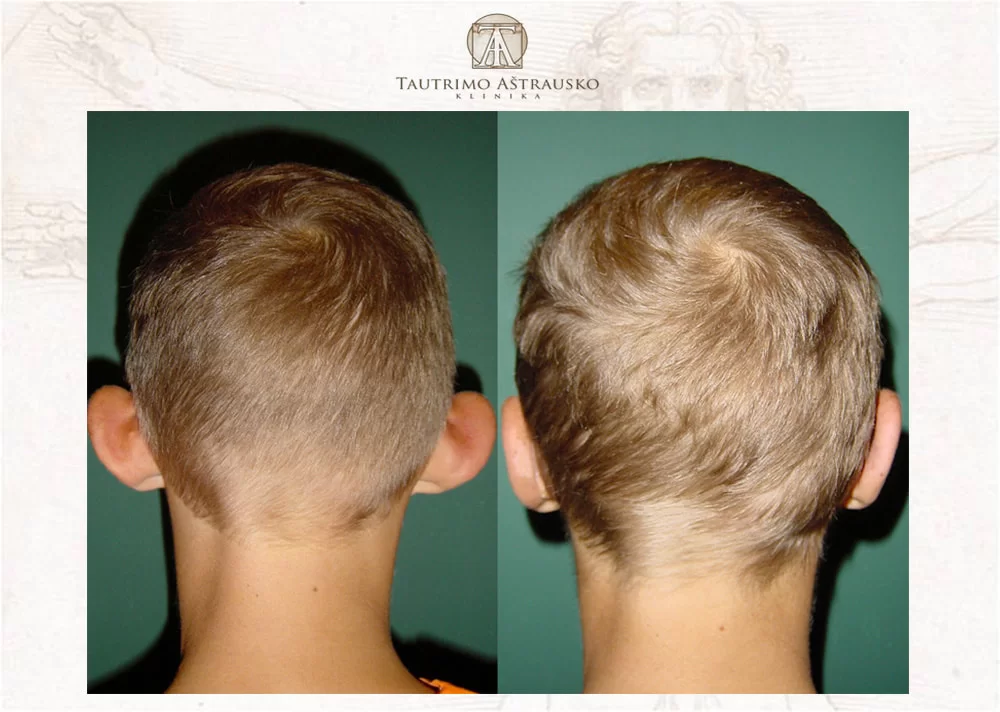
Ear plastic surgery (otoplasty) is performed to correct protruding ears; the shape and size of the ear can be adjusted, and congenital or post-traumatic defects can be corrected. Results are visible immediately, and ear plastic surgery can be performed for both adults and children. Although ear plastic surgery is usually associated with aesthetic changes, its benefits go beyond appearance: ear correction reduces not only physical but also psychological discomfort and self-doubt related to ear deformities or ear injuries.
Procedure Steps
Depending on the patient’s individual needs, local or general anesthesia is used. The incision is made behind the ear, ensuring minimal scar visibility and a very natural-looking result.
During the Incision:
– Excess tissue is removed; – Ear cartilage is softened; – The ear’s protrusion angle is reduced, bringing the concha closer to the head; – In rare cases, a direct conchal excision is performed (via the anterior surface).
Procedure duration
Under local anesthesia
1 hour
Under general anesthesia
up to 1.5 hours
Procedure duration
Under local anesthesia
1 hour
Under general anesthesia
up to 1.5 hours
The surgery price
Includes
surgery;
Local or general anesthesia;
Medications;
Dressing changes at the incision sites, suture removal;
postoperative check-ups at the Tautrimas Aštrauskas Clinic, Vičiūnų g. 24, Kaunas.
–
Price
Under local anesthesia
EUR 1,300
Preparing for Ear Correction Surgery
Preparation begins with a consultation with the operating surgeon—during which the patient’s expectations, the procedure steps, and potential results are discussed, and ear measurements and photographs are taken. Blood tests to assess overall health are also required before surgery. If protruding ear surgery is planned for a child, the patient’s parents are invited to collaborate with the doctor. During the consultation, parents receive all necessary information about the procedure and advice on how to prepare the child psychologically. The child should understand why and how the surgery will be performed, what to expect during the procedure and recovery, and also desire these changes. The staff of the Tautrimas Aštrauskas Clinic provide supportive guidance during preparation and answer any questions from the patient and their parents.
Postoperative Period
After surgery, the ears are bandaged with special dressings, which are worn continuously for the first week and then at night only for the next 4 weeks. After the procedure, we recommend limiting physical activity for at least 1 month, avoiding contact sports for 6 months, and attending two follow-up visits at the clinic:
– The first check-up one day after surgery; – Suture removal after one week.
After surgery, the ears may be slightly discolored and swollen; however, swelling subsides within two weeks and bruising resolves. Unlike other facial surgeries—such as eyelid surgery (blepharoplasty) or nose plastic surgery (rhinoplasty)—the results of ear plastic surgery are visible immediately and fully stabilize within 1–1.5 years after the operation. Incision scars are hidden behind or inside the ear, making them practically invisible.
Frequently asked questions about ear plastic surgery
When can I wash my hair after ear surgery?
No sooner than 3 days after the surgery.
When can I wear glasses?
You may wear glasses once the swelling has subsided—approximately 2–3 weeks after surgery. Wearing them while swelling persists may cause discomfort.
When can I resume active pursuits after surgery?
No sooner than 1 month after the surgery.
When can I remove the bandages? How long should I wear a headband at night?
Wearing bandages throughout the day is required for the first week after surgery. At night, bandages are worn for 4 weeks. The headband should not compress the ears—only support the dressings.