
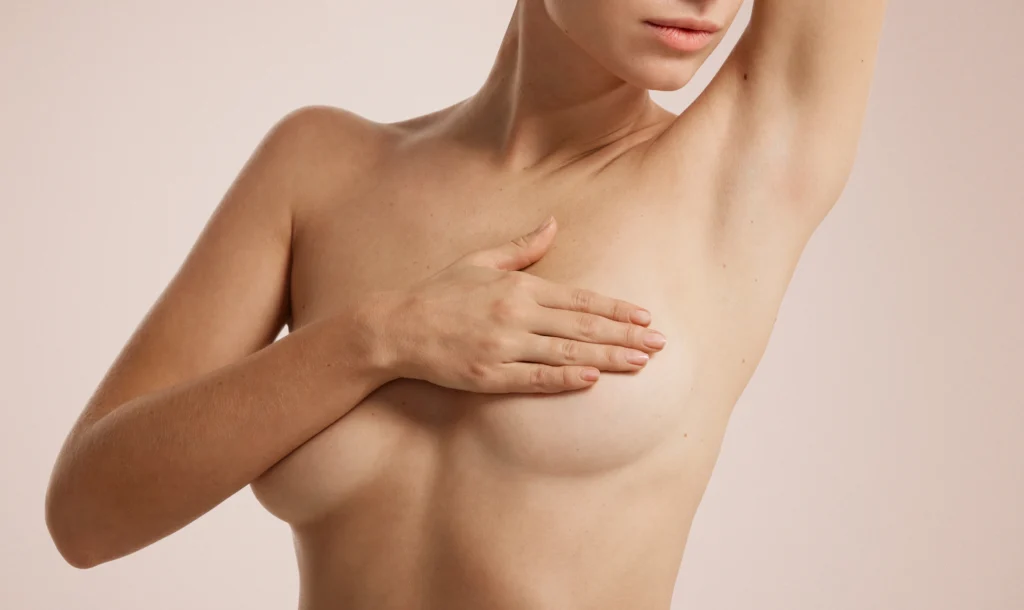
Breast Reduction
Breast reduction (reduction mammaplasty) is intended for women who, due to large breasts, suffer back and shoulder pain, have restricted physical activity, and experience psychological and emotional discomfort. The goal of this procedure is to remove excess fatty and glandular tissue and skin and reshape the breast to better match body proportions; during the operation a breast lift is also performed, which changes the position of the nipple and areola. At the patient’s request, the size of the areola can be reduced during the surgery.
Breast Reduction Surgery
Numerous techniques have been proposed for breast reduction; however, most commonly, reduction is performed using the so-called “keyhole” incision. Depending on breast size, the degree of nipple ptosis, and various risk factors discussed by the surgeon with the patient, it is decided whether the nipple–areola complex will be elevated while preserving its own innervation and blood supply, or transplanted to the new position as a free graft. The patient must be aware that, regardless of the chosen reduction technique, postoperative scars will remain on the breast which, if the operation is performed properly and complications are avoided, should be easily concealed under a bra or swimsuit.
Recovery and Healing after Breast Reduction Surgery
After the procedure, the patient may be advised to wear a special bra for several weeks. Patients typically return to work after 10-14 days. More strenuous physical activity should be avoided for at least a few weeks. The final cosmetic result is usually evident only after several months.
The surgery price
Includes
surgery
General Anesthesia
Night After Surgery at Our Clinic
Postoperative care
–
Price
| Breast reduction | 4,000-4500 EUR |
| Gigantomastia reduction | 5,500 EUR |
The exact surgery price will be determined during the consultation when the surgeon assesses the complexity of the surgery.
Frequently Asked Questions
When is breast reduction surgery recommended?
Breast reduction surgery can be performed purely for aesthetic reasons, i.e., the woman does not experience any physical symptoms but is bothered by disproportionately large breasts, which may lead her to avoid certain clothing, limit physical activity, forgo public beaches, etc. However, more commonly, a woman with very large breasts (bra size > D) experiences not only emotional but also physical symptoms: shoulder, neck, and back pain, skin irritation and rashes, bra strap indentations, and so on.
Is it possible to breastfeed after breast reduction surgery?
Whether breastfeeding will be possible after breast reduction largely depends on the technique used. If the milk ducts can be preserved, breastfeeding may remain possible, although there is always a risk that milk flow will be impaired. It is also important to note that pregnancy, childbirth, and breastfeeding can significantly change the shape and size of the breasts; therefore, when possible, it is recommended to postpone breast reduction until after the last breastfeeding. Also keep in mind that if you had a breast reduction before becoming pregnant and would like to breastfeed, do not give up too soon. Mindset and emotions play a very significant—often decisive—role in milk production and successful breastfeeding.

